

On this page
Disclaimer: This article is for education and reflection. It is not medical advice, diagnosis, or treatment. For diagnosis or medication, consult a psychiatrist. For therapy and counselling support, TherapyMends can help.
Crisis support: This article discusses eating disorders and body image distress. If you are struggling with thoughts of self-harm, please reach out immediately:
- Tele-MANAS: 14416 or 1-800-891-4416 (Govt of India, 24/7, free, multilingual)
- KIRAN Mental Health Helpline: 1800-599-0019 (24/7, toll-free)
- iCall (TISS): 9152987821 (Mon–Sat, 8 AM–10 PM)
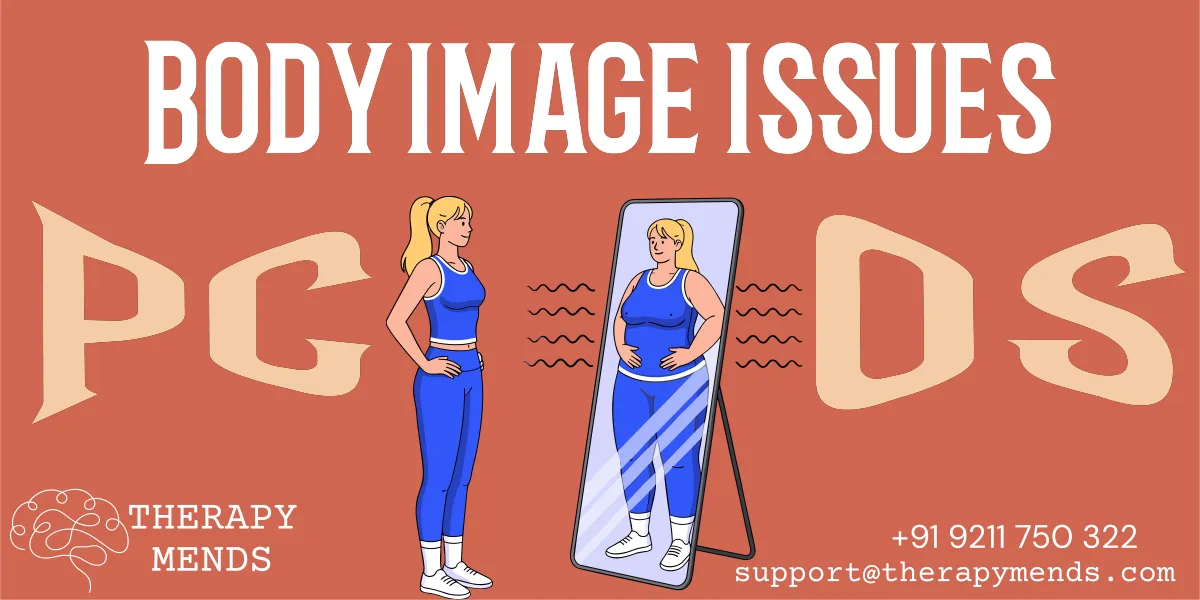
You catch your reflection and immediately look away. The facial hair is back despite tweezing yesterday. Your jeans don't fit the same way. The acne that was supposed to end after teenage years won't go away. You avoid photos, skip social events, and spend hours researching removal treatments, diets, and miracle cures.
Living with PCOS means dealing with symptoms that directly challenge how society says women should look. While friends worry about occasional breakouts, you're managing persistent acne, unwanted hair growth, weight that won't budge, and thinning scalp hair. The physical symptoms are hard enough, but the emotional toll of feeling like your body is betraying you can be devastating.
If you're struggling with how PCOS has changed your appearance, you're not struggling alone, and your pain is valid. Body image issues with PCOS aren't vanity or superficial concerns. They're a legitimate mental health challenge that deserves attention and support.
For a broader understanding of how PCOS affects mental health beyond body image - including its links to anxiety, depression, and treatment options - see our guide on PCOS and mental health.
The Physical Reality of PCOS Symptoms
Hirsutism (Excess Hair Growth)
Excess facial or body hair is one of the visible symptoms listed by the World Health Organization PCOS fact sheet. It often appears as coarse, dark hair in areas such as the upper lip, chin, chest, back, or stomach.
The WHO PCOS fact sheet lists excess facial or body hair as a common PCOS symptom, and the PCOS depression/anxiety meta-analysis links PCOS with higher psychological distress. For many clients, visible hair growth is especially distressing because it is hard to conceal.
For many women, hirsutism is the most distressing symptom because it's visible and directly contradicts femininity standards. You can hide weight under clothes, but facial hair feels impossible to conceal, requiring constant maintenance and creating anxiety about being "found out."
Acne and Skin Issues
PCOS-related acne tends to be:
- Concentrated on the lower face, jawline, and neck
- Deep, cystic, and painful
- Resistant to typical acne treatments
- Persistent into adulthood
Acne is listed by the WHO PCOS fact sheet as a PCOS symptom, and persistent adult acne can add psychological distress because it is visible and often misunderstood.
Acanthosis nigricans (dark, velvety skin patches typically in neck, armpits, or groin) affects up to 40% of women with PCOS. These patches are often mistaken for poor hygiene, adding shame to an already distressing symptom.
Weight Gain and Distribution Changes
Approximately 40-60% of women with PCOS struggle with weight gain, and for many, weight loss is biochemically challenging due to insulin resistance.
The WHO PCOS fact sheet describes PCOS as an endocrine-metabolic condition, not a willpower problem. Weight-related stigma can delay care and intensify shame, so symptom management should be medically informed and psychologically compassionate.
Weight distribution often changes with PCOS, with more weight accumulating around the midsection (android pattern), which further fuels body dissatisfaction.
Hair Loss
While dealing with excess facial and body hair, many women with PCOS simultaneously experience thinning scalp hair or male-pattern baldness. This cruel irony adds to the psychological burden.
Hair thinning is another visible PCOS symptom listed by the WHO PCOS fact sheet, and visible symptoms can affect emotional wellbeing and quality of life.
Other Visible Changes
- Oily skin
- Skin tags
- Changes in body composition (more muscle mass, broader shoulders)
- Pigmentation changes
- Stretch marks from rapid weight changes
Each symptom alone might feel manageable, but the combination creates a sense that your body doesn't look or feel like your own.
The Emotional Weight of Visible Symptoms
The psychological impact of PCOS symptoms extends far beyond the physical changes.
The Shame Cycle
Peer-reviewed research consistently links PCOS with body dissatisfaction, depression, and anxiety; a Human Reproduction systematic review and meta-analysis found substantially higher rates of moderate to severe depressive and anxiety symptoms among people with PCOS. Shame can create isolation: you avoid situations where symptoms might be noticed, which can increase loneliness and worsen mental health.
Shame tells you that something is fundamentally wrong with you, not just that you're experiencing difficult symptoms. You internalize the idea that your body is "wrong" or "broken."
The Constant Vigilance
Body image issues with PCOS often involve hypervigilance:
- Checking your face constantly for new hair
- Monitoring your weight obsessively
- Inspecting your skin in every mirror
- Comparing yourself to other women
- Researching treatments and solutions endlessly
This constant monitoring keeps you trapped in appearance preoccupation, draining mental energy that could go toward living your life.
Appearance monitoring can keep attention locked on perceived flaws. Because the PCOS depression/anxiety meta-analysis links PCOS with higher depression and anxiety symptoms, reducing repetitive checking is a reasonable therapeutic target.
Social Comparison and Isolation
Social media and everyday interactions become painful when you're constantly comparing your appearance to women without PCOS. Everyone else seems to have clear skin, thick hair, and bodies that respond predictably to diet and exercise.
Appearance-focused social media can intensify comparison and body dissatisfaction, especially when PCOS symptoms already feel visible or stigmatized.
You might avoid social situations, dating, intimacy, or any scenario where your symptoms might be visible or discussed. This isolation worsens depression and removes crucial social support.
Identity and Femininity
Many women with PCOS describe feeling "less feminine" or "not like a real woman" due to symptoms like facial hair, deeper voice, or masculine body fat distribution.
PCOS symptoms that contradict traditional femininity ideals can create severe distress, particularly when family or cultural messages frame those symptoms as personal failure.
This isn't about conforming to gender stereotypes. It's about the grief of feeling your body doesn't match your gender identity or self-concept.
Internalized Blame
Despite PCOS being a medical condition, many women blame themselves. "If I just tried harder, ate better, exercised more, my symptoms would improve." This self-blame is reinforced when doctors tell you to "just lose weight" without acknowledging the metabolic challenges of PCOS.
Cultural Context: Beauty Standards and PCOS in India
In India, PCOS symptoms often conflict with particularly rigid beauty standards, amplifying psychological distress.
Fair Skin Preference
The cultural premium on fair skin makes acne, hyperpigmentation, and acanthosis nigricans especially distressing. The skin-lightening industry thrives on these insecurities, often worsening skin problems while promising solutions.
Facial Hair Stigma
Facial hair on women is highly stigmatized in Indian culture. Women with hirsutism report intense shame about facial hair, along with family members commenting on it or pressuring them to undergo removal treatments.
Indian women with visible PCOS symptoms may face added cultural stigma around facial hair, skin, marriage, and fertility. This social pressure can intensify the psychological burden described in PCOS mental-health research.
Marriage Pressure and Fertility Concerns
The emphasis on marriage and motherhood makes PCOS particularly stressful for Indian women. Visible symptoms create anxiety about marriage prospects, while fertility concerns add another layer of worry.
Families may pressure women to "fix" their appearance before marriage, treating symptoms as cosmetic flaws rather than medical conditions. Some women report being told not to disclose their PCOS diagnosis to potential partners.
Family Comments
The Indian culture of commenting on physical appearance means women with PCOS often face direct criticism from relatives: "You've gained weight," "What happened to your face?" "Why don't you do something about that hair?"
These comments, even when well-intentioned, reinforce body shame and the feeling that your appearance is a problem to be solved.
Limited Medical Understanding
Many Indian women report their PCOS symptoms being dismissed by doctors as cosmetic concerns or blamed entirely on weight, delaying proper diagnosis and treatment. This medical gaslighting compounds the psychological impact.
Why Body Image Work Is Essential With PCOS
Medical management of PCOS addresses physical symptoms: medications for insulin resistance, hormones for regulation, topical treatments for acne and hair. But medication alone doesn't address the psychological patterns developed while living with distressing symptoms.
The Mind-Body Connection
Mental and physical health interact in PCOS. The 2023 international PCOS guideline recommends psychological screening and support as part of PCOS care because emotional wellbeing, health behaviours, sleep, and symptom management influence each other.
The 2023 international PCOS guideline recommends addressing emotional wellbeing in PCOS care. Body dissatisfaction, stress, sleep, and self-care can interact with symptom management, even when they are not the sole cause of symptoms.
Addressing body image isn't separate from treating PCOS. It's an essential component of comprehensive care.
Breaking the Diet-Restrict-Binge Cycle
Body dissatisfaction often drives restrictive dieting, which for many women with PCOS backfires. Restriction triggers binge eating, creates metabolic adaptation, and worsens the relationship with food.
The 2023 international PCOS guideline recommends screening for disordered eating in PCOS. Restrictive dieting can backfire by increasing binge risk, shame, and preoccupation with food.
Body image work helps you develop a healthier relationship with food and your body, which paradoxically often improves symptoms more than restrictive dieting.
Reclaiming Your Life
Body image issues keep you from living fully. You skip events, avoid relationships, hide from cameras, and wait until you "fix" your appearance to start living.
But waiting for your body to meet certain standards before allowing yourself happiness means you might wait forever. Body image work helps you live now, with the body you have, while still pursuing symptom management.
Practical Strategies for Coping With Body Image Challenges
Challenge Appearance-Based Thoughts
Notice when your mind tells you appearance-based stories: "I'm ugly," "No one will love me like this," "I can't go out looking like this."
These thoughts feel like facts but are interpretations. Practice asking:
- Is this thought helpful?
- Would I say this to a friend with PCOS?
- What's a more balanced way to think about this?
Cognitive restructuring is a core component of CBT, and CBT has broad evidence for anxiety and mood symptoms in a review of CBT meta-analyses; PCOS-specific care guidelines recommend screening and support for emotional wellbeing.
Practice Body Neutrality
Body positivity can feel impossible when you're struggling with PCOS symptoms. Body neutrality offers an alternative: your body doesn't have to be beautiful to be valuable.
Instead of forcing positive thoughts about appearance, practice neutral appreciation:
- "My body is managing a complex medical condition"
- "My body allows me to do things I value"
- "My appearance is just one small part of who I am"
Body neutrality can reduce distress without requiring positive feelings about appearance, making it a practical therapeutic stance for chronic visible symptoms.
Body Positivity vs Body Neutrality: What's the Difference?
Many women with PCOS find body positivity difficult to sustain when symptoms are severe. Body neutrality offers a more accessible middle ground.
| Dimension | Body Positivity | Body Neutrality |
|---|---|---|
| Core stance | All bodies are beautiful and worthy of love and celebration | Your body doesn't have to be beautiful to be valuable |
| Typical self-talk | "I love my body" / "My body is beautiful" | "My body is managing a complex condition" / "My body lets me do things I value" |
| Ease with PCOS | Often feels forced or dishonest during symptom flares | More achievable; doesn't require positive feelings about appearance |
| Focus | Appearance and how your body looks | Function, values, and what your body enables you to do |
| Best for PCOS when | Symptoms are well-managed and distress is low | Symptoms are active; distress is high; positive thinking feels impossible |
Expand Your Self-Concept
When your identity revolves around appearance, any perceived flaw feels catastrophic. Actively build identity beyond physical attributes:
- Your skills and competencies
- Your relationships and how you treat others
- Your values and what you stand for
- Your interests and passions
- Your personality traits
- Your contributions to others
Expanding your self-concept is a common therapy goal: appearance becomes one part of identity rather than the whole measure of worth.
Limit Appearance Checking and Comparison
Set boundaries around behaviors that worsen body image:
- Limit mirror time to functional needs (not extended inspection)
- Reduce time on appearance-focused social media
- Stop photographing yourself to document flaws
- Avoid comparing your appearance to others
Reducing appearance checking is a common CBT strategy for body image distress; CBT has broad evidence for anxiety and related symptoms in a review of CBT meta-analyses.
Build Compassionate Self-Talk
Notice how you talk to yourself about your body. Would you speak to a friend this way? Practice compassionate responses:
Instead of: "I'm disgusting"
Try: "I'm dealing with a medical condition that affects my appearance, and that's really hard"
Instead of: "I should be able to control this"
Try: "PCOS makes certain things biochemically difficult, and I'm doing my best"
Self-compassion can reduce shame and avoidance, and it fits the psychological-support recommendations in the 2023 international PCOS guideline.
Find Community
Connecting with other women with PCOS reduces isolation and normalizes your experience. Online communities, support groups, or even one friend who gets it can make a tremendous difference.
Peer support can reduce isolation by reminding you that PCOS symptoms are medical and common, not personal failures.
Curate Your Media Diet
What you consume affects how you feel about yourself. Follow body-diverse accounts, women with PCOS sharing their experiences, and content that doesn't center appearance as the most important thing about women.
Unfollow accounts that trigger comparison or make you feel inadequate. Your mental health is more important than staying updated on anyone's life.
How Therapy Helps With PCOS Body Image
While self-help strategies are valuable, working with a therapist provides specialized support for the complex psychological aspects of PCOS.
Body Image-Focused Therapy
Therapists trained in body image issues help you:
- Identify the origins of your appearance beliefs
- Challenge internalized beauty standards
- Develop self-worth independent of appearance
- Process grief about body changes
- Build resilience against external criticism
Body-image-focused therapy can help you reduce checking, avoidance, shame, and self-worth tied only to appearance; CBT principles for these patterns are supported by this review of CBT meta-analyses.
Cognitive Behavioral Therapy (CBT)
CBT addresses the thought patterns that maintain body image distress:
- Catastrophic thinking about appearance
- All-or-nothing thinking ("If I'm not perfect, I'm worthless")
- Mind-reading ("Everyone is judging my appearance")
- Filtering (only noticing negative aspects of appearance)
CBT has broad evidence for anxiety, mood, and related cognitive-behavioural patterns in this review of CBT meta-analyses.
CBT vs ACT for PCOS Body Image Distress
Both approaches are evidence-based. The table below outlines when each tends to be the better fit.
| Dimension | Cognitive Behavioural Therapy (CBT) | Acceptance & Commitment Therapy (ACT) |
|---|---|---|
| Core mechanism | Challenge and restructure unhelpful thoughts about appearance | Accept difficult thoughts without letting them drive behaviour |
| Best suited for | Specific negative thought patterns; catastrophising; perfectionism | Chronic, ongoing distress; avoidance; living with irreversible symptoms |
| Goal | Reduce the frequency and intensity of negative body image thoughts | Reduce the influence of negative thoughts on daily life and values |
| Evidence for PCOS | Strong - multiple RCTs show improvement in body image and mood | Emerging - particularly effective for chronic illness adjustment |
| Typical duration | 8-16 structured sessions | 8-20 sessions; often integrated with other approaches |
Acceptance and Commitment Therapy (ACT)
ACT helps you accept difficult thoughts and feelings about your body while taking action aligned with your values rather than appearance goals.
ACT teaches you to:
- Notice appearance thoughts without buying into them
- Accept that some discomfort is part of having PCOS
- Choose actions based on values (relationships, growth, contribution) rather than appearance concerns
- Build psychological flexibility around body image
ACT can be useful when appearance changes are ongoing because it focuses on values-based action even when difficult thoughts remain present.
Processing Grief and Loss
Many women need to grieve how PCOS has changed their bodies and lives. This grief is legitimate and deserves space.
Therapy provides a place to:
- Acknowledge what you've lost (the body you had, the ease others have, the freedom from constant management)
- Express anger, sadness, and frustration without judgment
- Gradually accept your current reality while still pursuing treatment
- Find meaning despite challenges
Preventing and Treating Eating Disorders
Given the high rates of disordered eating in PCOS, early intervention is crucial. A therapist can help you:
- Identify disordered eating patterns before they become entrenched
- Heal your relationship with food
- Separate health behaviors from appearance-driven behaviors
- Challenge diet culture messages
- Develop intuitive eating skills
Because the 2023 international PCOS guideline recommends screening for disordered eating in PCOS, early psychological support is important when food, weight, or body checking starts to feel compulsive.
Building Assertive Communication
Therapy can help you develop skills to respond to:
- Family members commenting on your appearance
- Doctors dismissing your concerns
- Partners or friends who don't understand
- Intrusive questions about your symptoms
Learning to set boundaries and advocate for yourself improves both mental health and medical care quality.
Working through PCOS body image issues with a therapist who gets it
TherapyMends therapists have experience supporting women with PCOS - body image work, eating disorder prevention, and building resilience against cultural pressure. First session from ₹2,499.
Book a session →Self-Compassion: The Foundation of Healing
Self-compassion isn't about pretending your struggles don't exist or forcing positive thinking. It's about treating yourself with the same kindness you'd offer a friend facing similar challenges.
Three components of self-compassion, based on researcher Kristin Neff's work:
1. Self-Kindness vs. Self-Judgment
Speaking to yourself with warmth and understanding rather than harsh criticism when you're struggling.
2. Common Humanity vs. Isolation
Recognizing that suffering, imperfection, and life challenges are part of the shared human experience, not signs that something is uniquely wrong with you.
3. Mindfulness vs. Over-Identification
Acknowledging difficult emotions without being consumed by them or suppressing them.
You Are More Than Your Symptoms
Your worth isn't determined by whether your skin is clear, your weight is "ideal," or your hair grows where society says it should. You're a whole person with thoughts, feelings, talents, relationships, and contributions that matter.
PCOS has affected your body, but it doesn't define you. The challenge isn't to love every symptom or pretend they don't bother you. The challenge is to live fully despite them, to treat yourself with compassion through difficulty, and to seek support when you need it.
Your body is doing its best to function with a complex hormonal condition. That deserves acknowledgment and kindness, not harsh judgment.
Healing your relationship with your body while managing PCOS isn't linear. Some days you'll feel okay, others will be hard. Both are normal. What matters is that you don't face this alone.
Frequently Asked Questions
Does PCOS cause body image issues?
Yes. PCOS symptoms - hirsutism, acne, weight changes, hair thinning - can conflict with conventional beauty standards. The WHO PCOS fact sheet notes that PCOS can affect emotional wellbeing, and the PCOS depression/anxiety meta-analysis links PCOS with higher depression and anxiety symptoms.
What is the best therapy for PCOS-related body image issues?
CBT and ACT both have strong evidence for body image distress in chronic health conditions. CBT targets unhelpful thought patterns about appearance; ACT builds psychological flexibility so those thoughts interfere less with daily life. Most therapists integrate elements of both approaches.
Is body positivity realistic when you have PCOS?
For many women with PCOS, forcing positive feelings about appearance feels dishonest and can backfire. Body neutrality - the idea that your body doesn't have to be beautiful to be valuable - is often more sustainable. The goal is not to love every symptom, but to live fully despite them.
Can PCOS cause depression and anxiety?
Yes. The PCOS depression/anxiety meta-analysis found higher rates of depressive and anxiety symptoms among people with PCOS, and the 2023 international PCOS guideline recommends routine psychological screening and support.
How do I handle family comments about my PCOS symptoms?
Assertive communication works best. A brief, factual response - "I have a hormonal condition called PCOS that affects how my body looks. My doctors are managing it" - is usually enough. You don't owe anyone a detailed explanation. Therapy can help you rehearse these responses and manage the emotional impact when family pressure is ongoing.
Should I disclose my PCOS diagnosis to a romantic partner?
This is a personal decision, but early transparency generally supports healthier relationships. PCOS is a medical condition - not a character flaw. A partner who responds with judgment is providing important information about the relationship. Many women find that open communication reduces the constant anxiety around being "found out."
Does losing weight help with PCOS body image?
Weight loss can reduce some PCOS symptoms for women with insulin resistance, but tying self-worth to weight typically worsens the relationship with food and increases psychological distress. Body image work is most effective when it proceeds independently of weight.
Get Support for PCOS Body Image Issues
At TherapyMends, we connect you with therapists who understand the unique psychological challenges of living with PCOS. Our therapists specialize in body image and self-esteem work, chronic illness mental health support, eating disorder prevention and treatment, and culturally sensitive care for Indian women.
Your mental health matters as much as your physical symptoms. Get the support you deserve.
Explore our therapy for anxiety and self-esteem.
Book Your First SessionPCOS-related body image distress is common because visible symptoms such as excess hair growth, acne, weight changes, and hair thinning can affect self-esteem and daily functioning. The WHO PCOS fact sheet notes the emotional impact of PCOS symptoms, and the 2023 international PCOS guideline recommends psychological screening and support; CBT, ACT, and self-compassion practices can help reduce distress.

Co-founder, TherapyMends